
Upcoming events.
Film Screening: Hugo Ljungbäck, Behind Closed Doors
Film screening: Hugo Ljungbäck, Behind Closed Doors
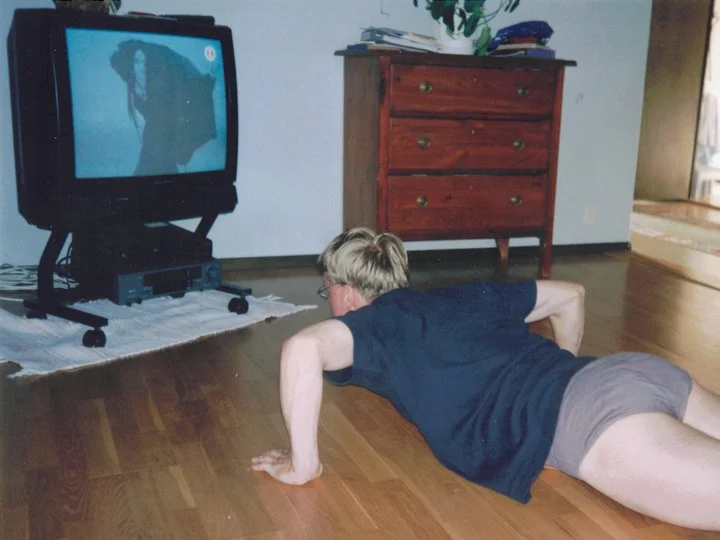
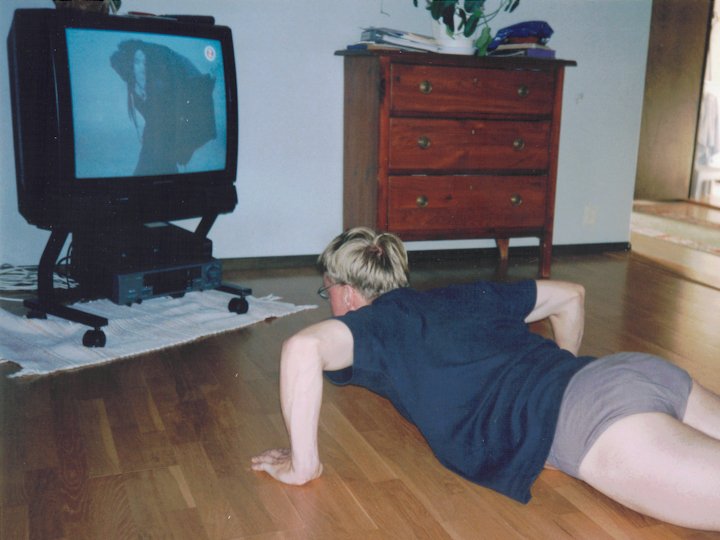
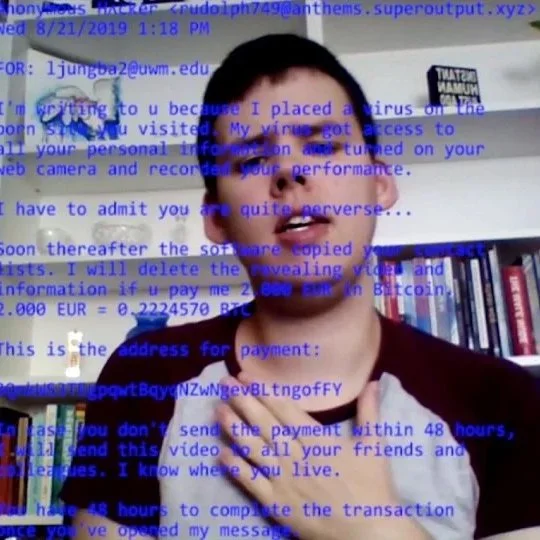
Join us for a free film screening by visiting artist, Hugo Ljungbäck. This hour-long program presents the first survey of Ljungbäck’s work spanning the last nine years. Please note that some of the videos feature sexually explicit materials.
FREE!
Hugo Ljungbäck is a Swedish filmmaker, archivist, curator, and media scholar. His videos explore queer history, representation, identity, and sexuality through an autobiographical lens, emphasizing the possibilities afforded by found footage filmmaking in response to the ephemerality of queer history. By using appropriated text, photos, sound, and video to make visible the hidden, sometimes unflattering, and often unarchivable traces of queer experience, his work builds a makeshift archive of love letters, home movies, YouTube videos, sex tapes, spam emails, physique magazines, propaganda films, and selfies.
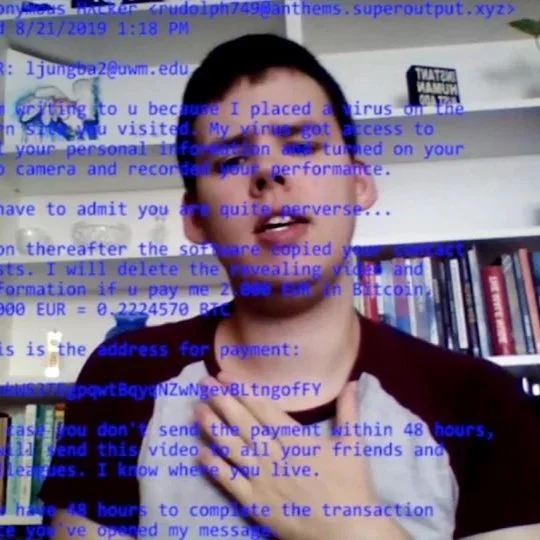
Ljungbäck holds a BFA in Film, Video, Animation, and New Genres from the University of Wisconsin–Milwaukee and an MFA in Studio Art from the University of North Carolina at Chapel Hill. He is currently a PhD Student in Cinema and Media Studies at the University of Chicago. His videos have screened at over 75 festivals, galleries, and museums internationally and are distributed worldwide by Vtape and Light Cone.
Rotoscope Animation Workshop
Rotoscope Animation Workshop
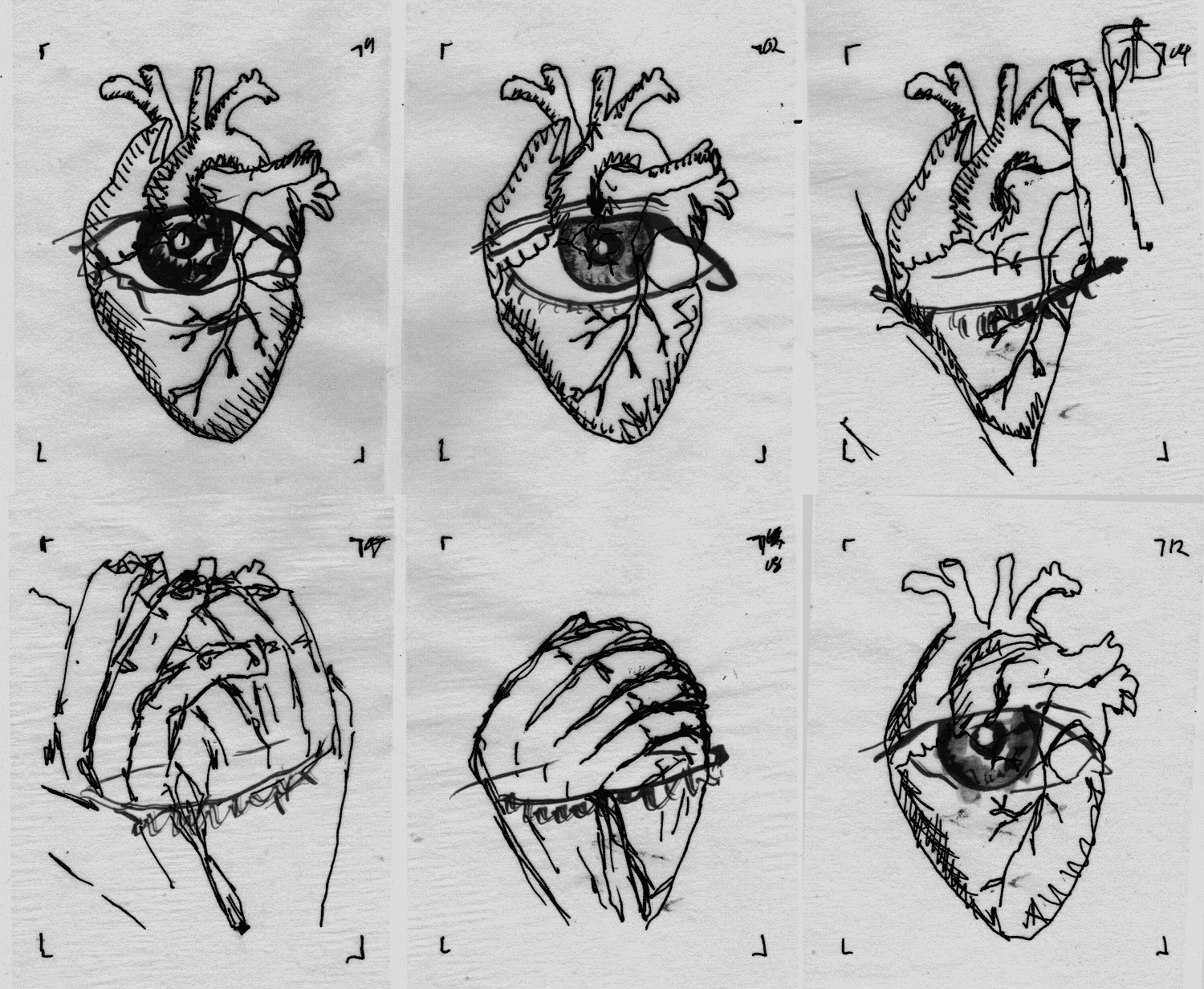
Join us on Thursday, July 30 for an animation workshop with visiting artist Hugo Ljungbäck! This hands-on workshop will explore analog rotoscope animation using DIY experimental methods. Each participant will create their own one-second sequence - no previous experience necessary! Materials will be provided!
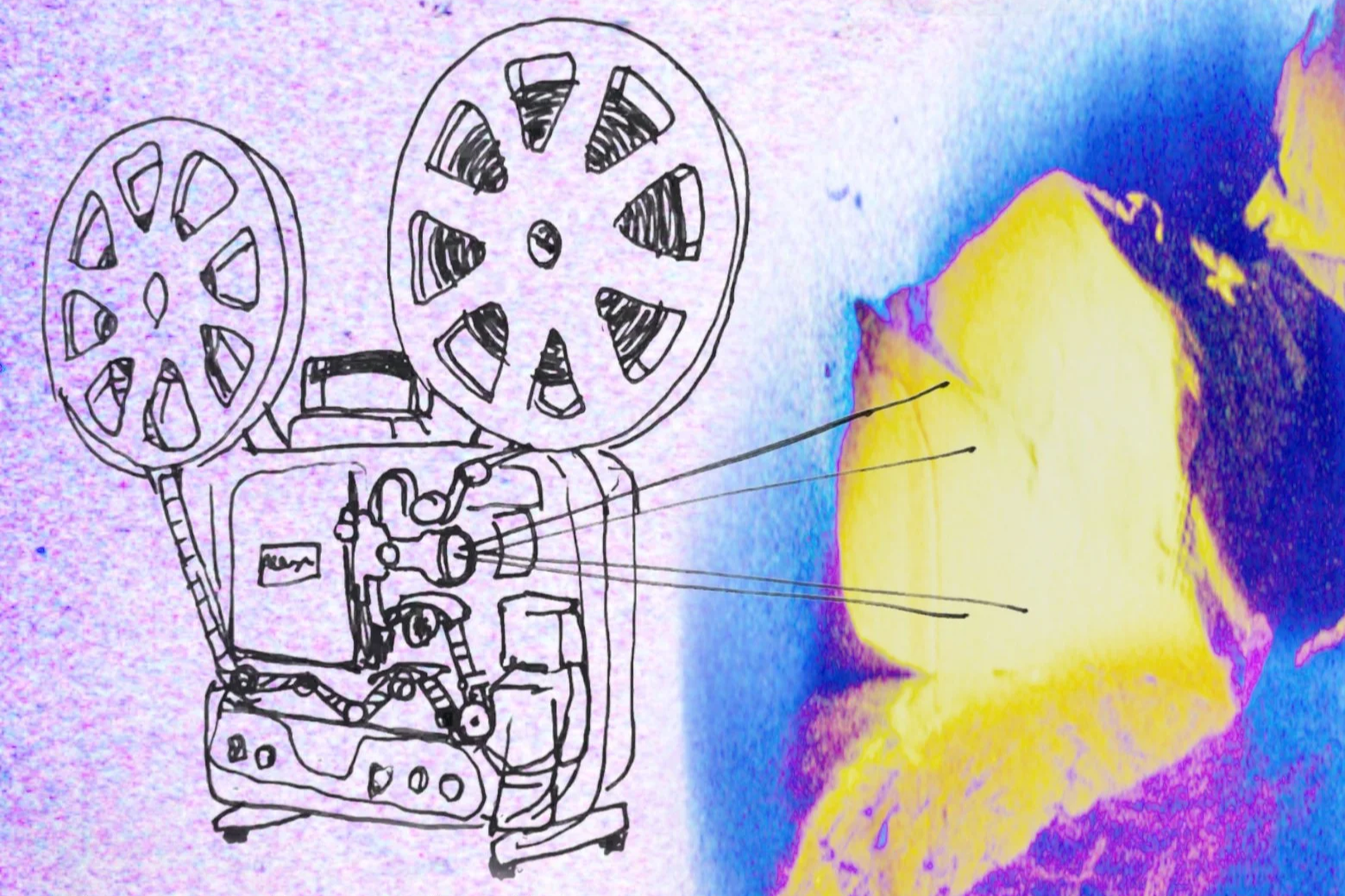
Rotoscope is an animation process where the maker traces over existing drawings or live-action footage frame-by-frame. In our workshop, participants will draw, paint, and/or collage over printed images. Then we’ll scan and digitally assemble the work to create an animation. Here’s a short video from one of Hugo’s past workshops!
Suggested donation: $20 (notaflof)
Funds raised will be used to support our visiting artist.
About the Artist:
Hugo Ljungbäck is a Swedish filmmaker, archivist, curator, and media scholar. His videos explore queer history, representation, identity, and sexuality through an autobiographical lens, emphasizing the possibilities afforded by found footage filmmaking in response to the ephemerality of queer history. By using appropriated text, photos, sound, and video to make visible the hidden, sometimes unflattering, and often unarchivable traces of queer experience, his work builds a makeshift archive of love letters, home movies, YouTube videos, sex tapes, spam emails, physique magazines, propaganda films, and selfies.
Hugo holds a BFA in Film, Video, Animation, and New Genres from the University of Wisconsin–Milwaukee and an MFA in Studio Art from the University of North Carolina at Chapel Hill. He is currently a PhD Student in Cinema and Media Studies at the University of Chicago. His videos have screened at over 75 festivals, galleries, and museums internationally and are distributed worldwide byVtape andLight Cone.
Experimental film screening: “UNRULY FASCIA'‘
pop_up004: “UNRULY FASCIA”
signals of anti-fascist disruption
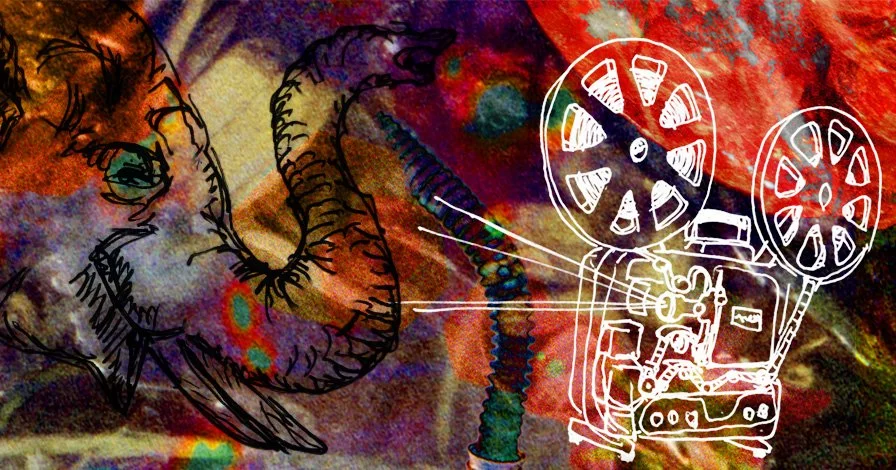
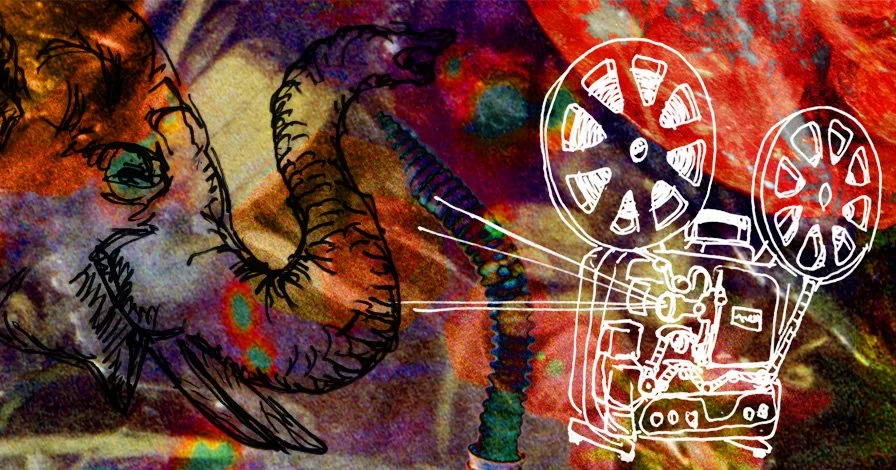
DRKRM MPLS brings you an evening of digital and celluloid films exploring anti-fascism within the fibers of experimental cinema. The films of these critical and creative minds weave together to ask: How do transgender body politics collude with anti-colonial resistance in the Global South? How does film as a medium illuminate the emergent horizon of liberatory ecologies? How close are we to collective realization that all global struggles are indisputably connected?
Join us in a black-box warehouse turned cinemateque in NE Minneapolis on May 14th from 7-9pm.
Curated by Reilly Miller and Monroe Chumklang.
*Be sure to join us again on Sunday, May 17 following the screening for a conversation with Anas Qadamani onInstagram live.
This event is part of a fundraiser series to support DRKRM’s wet darkroom buildout.
$15 suggested
Doors@6:30pm
Films@7pm
Tickets in advance or at the door.
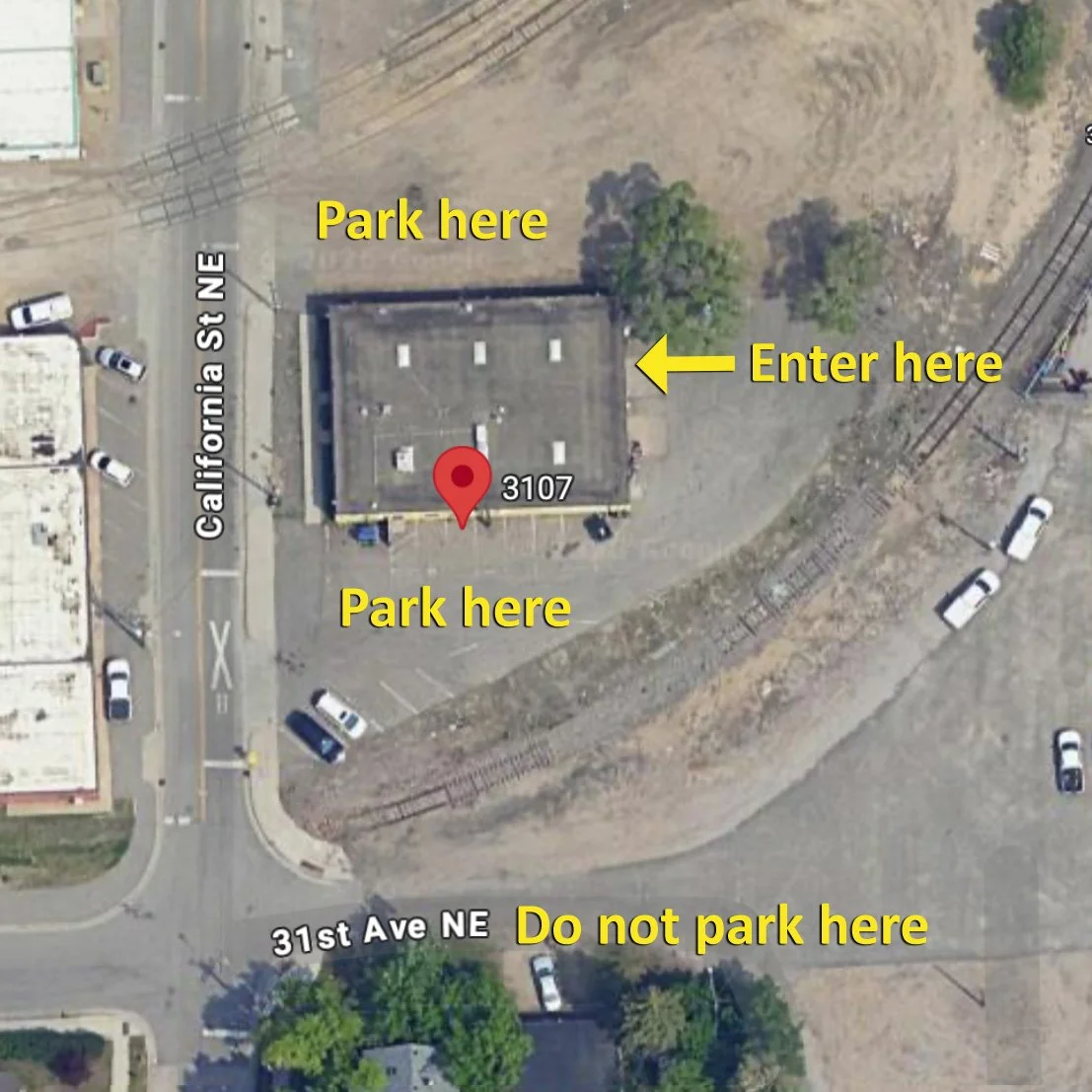
How to access TRXX Warehouse:
Screenings:
Between Relating and Use,Nazli Dinçel, 2018 (0:09:00)
IG reel, @mxsiaan (0:02:00)
Notes from the Periphery,Tulapop Saenjaroen, 2021 (0:13:31)
The Elephant & the Room,Anas Qadamani, 2024 (North American debut!) (0:14:00)
Greetings from Anas (0:05:00)
Intermission
Wasteland No. 3: Moons, Sons, Jodie Mack, 2021 (0:05:00)
RUN!,Malic Amalya, 2019 (0:10:08)
The Watchmen, Fern Silva, 2017 (0:10:00)
Love's Refrain,Nathaniel Dorosky, 2001 (0:22:30)
(run time: 1:31:09)
About the filmmakers
:::::
About the filmmakers :::::
Nazlı Dinçel
Nazlı Dinçel’s hand-made work reflects on experiences of disruption. They record the body in context with arousal, immigration, dislocation and desire with the film object: its texture, color and the tractable emulsion of the 16mm material. Their use of text as image, language and sound imitates the failure of memory and their own displacement within a western society.
In addition to exhibiting with institutions, Dinçel avidly self-distributes and tours with their work in micro-cinemas, artist run laboratories and alternative screening spaces in order to support and circulate handmade filmmaking to communities outside of institutions.
Dinçel transitioned in 2022. All genders in previous works and writings should be understood accordingly.
Siaan / Mx. Stallion
I AM 🏳️⚧️ Drag King 👑 Performer; Actor; Singer; Model; Mover & more 🎭 Jack of all trades, mastery in process 🎬
Instagram: @mxsiaan
Tulapop Saenjaroen
Born in 1986 in Chon Buri, Thailand, Tulapop Saenjaroen is an artist and filmmaker whose practice encompasses moving image, performance, and sound. His recent shorts interrogate the relationship between image production and the formation of subjectivity, as well as the paradoxes between control and freedom under late capitalism. Working through narrative, animation, and essay film, he explores themes such as tourism, self-care, mental illness, free labour, power relations in storytelling, metaphysical rupture, and cinema itself through processes of re-making and re-interpreting images and their networks.
Anas Qadamani
Anas QADAMANI (1998, Syria) is a multidisciplinary artist based in Rotterdam. He began his artistic journey in Syria as a classical cellist before fleeing the country at the age of 17 due to the war. Arriving in the Netherlands in late 2015, he continued his classical music studies and soon expanded his practice to include still and moving imagery, sound design, and composing for film and TV productions. His work is deeply influenced by his experiences of war and migration, and critically explores systemic violence and struggles in the Global South.
Jodie Mack
Jodie Mack is an experimental animator who received her MFA in film, video, and new media from The School of the Art Institute of Chicago in 2007. Combining the formal techniques and structures of abstract/absolute animation with those of cinematic genres, her handmade films use collage to explore the relationship between graphic cinema and storytelling, the tension between form and meaning. Musical documentary or stroboscopic archive: her films study domestic and recycled materials to illuminate the elements shared between fine-art abstraction and mass-produced graphic design. The works unleash the kinetic energy of overlooked and wasted objects and question the role of decoration in daily life.
Malic Amalya
Malic Amalya (b. 1980 - Burlington, VT) is an experimental filmmaker working across 16mm, video, and performance. His films are situated between formal avant-garde traditions, the anti-assimilation subculture of queercore, and intersectional feminism. His creative framework is informed by prison abolition, decolonization, anti-racism, gender self-determination, disability justice, anti-capitalism, and climate justice.
Malic is an Assistant Professor of Experimental Media and Film Production at Emerson College. He earned an MFA in Moving Image from the University of Illinois-Chicago, an MA in History and Theory of Contemporary Art from the San Francisco Art Institute, and a BA from Hampshire College. He was an Affiliate Artist at the Headlands Center for the Arts, and has been an artist in residence at Signal Culture and the Vermont Studio Center.
Fern Silva
Fern Silva (b. 1982, USA/Portugal) is an artist who primarily works in 16mm. His films consider methods of narrative, ethnographic, and documentary filmmaking as the starting point for structural experimentation. He has created a body of film, video, and projection work that has been screened and performed at various festivals, galleries, museums and cinematheques including the Toronto, Berlin, Locarno, Rotterdam, New York, London, Melbourne, and Hong Kong International Film Festivals, Anthology Film Archives, Gene Siskel Film Center, Cinemateca Boliviana, Museum of Art Lima, Brooklyn Academy of Music, Museum of Contemporary Art Chicago, New Museum, Greater New York at MOMA P.S.1, and Cinema du Reel at the Centre Georges Pompidou. He has organized and curated screenings at venues including the Nightingale Cinema, Gallery 400, and DINCA Vision Quest in Chicago. His work has been featured in publications including Film Comment, Cinema Scope, Filmmaker Magazine, Millennium, and Senses of Cinema. He studied art and cinema at the Massachusetts College of Art and Bard College. He is Visiting Faculty at Bennington College and is based in New York.
Nathaniel Dorsky
"The major part of my work is both silent and paced to be projected at silent speed (18 frames per second). Silence in cinema is undoubtedly an acquired taste, but the delicacy and intimacy it reveals has many rich rewards.
In film, there are two ways of including human beings. One is depicting them. Another is to create a film form which, in itself, has all the qualities of being human: tenderness, observation, fear, curiosity, the sense of stepping into the world, sudden murky disruptions and undercurrents, expansion, pulling back, contraction, relaxation, sublime revelation. In my work, the screen is transformed into a "speaking character", and the images function as pure energy rather than acting as secondary symbol or as a source for information or storytelling. I put shots together to create a revelation of wisdom through delicate surprise. The montage does not lead to verbal understanding, but is actual and present. The narrative is that which takes place between the viewer and the screen. Silence allows these delicate articulations of vision which are simultaneously poetic and sculptural to be fully experienced." - Nathaniel Dorsky
This activity is made possible by the voters of Minnesota through a grant from the Metropolitan Regional Arts Council, thanks to a legislative appropriation from the arts and cultural heritage fund.
Simple film camera basics
Co-hosted with Wider Skies Magazine
(100% of registration fees will go to support Unidos.)
*Workshop full, registration closed.
Class Description:
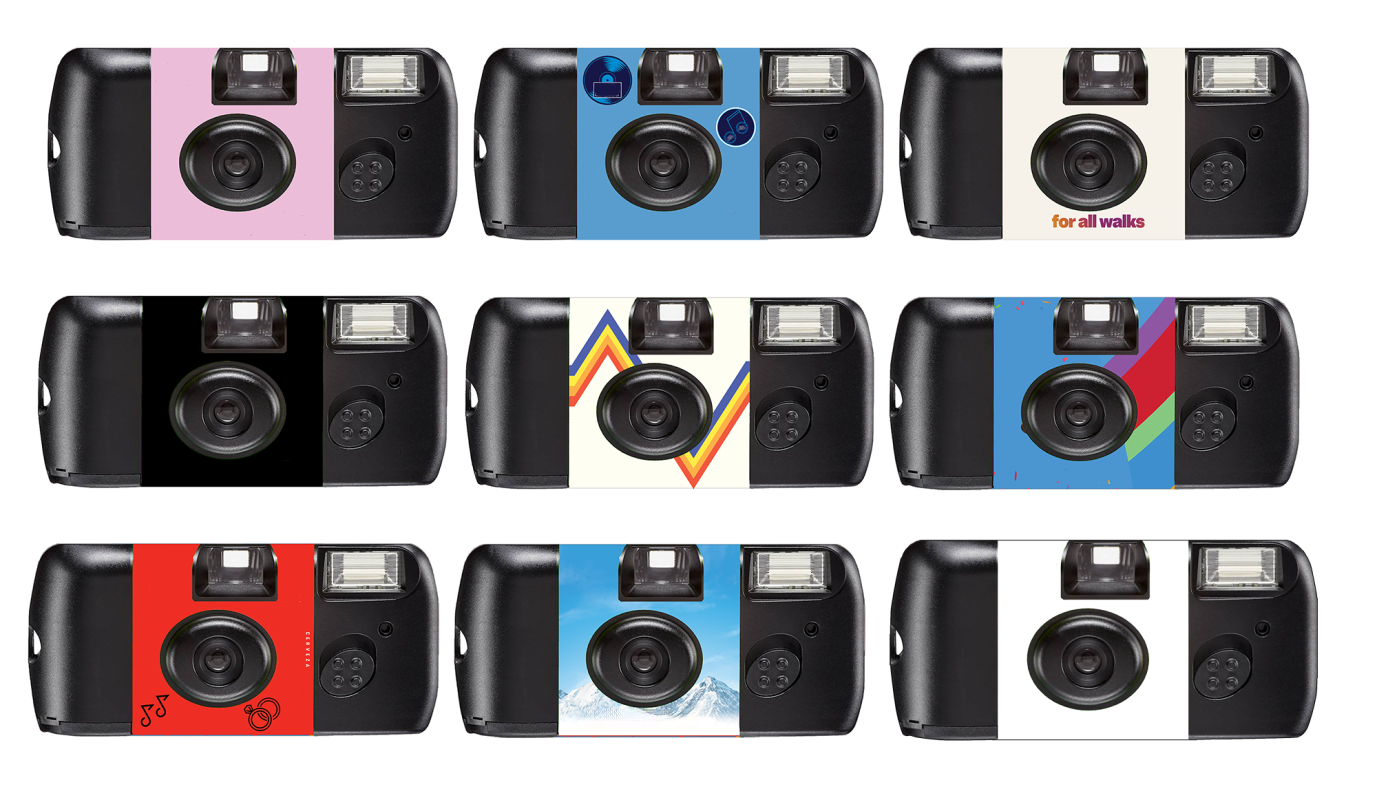
Do you love the look of analog photography but don’t have a camera or experience using one? Join us for Simple Film Camera Basics, a beginner-friendly introduction to film photography with disposable and automatic analog cameras.
This workshop covers the basics of film photography, including an overview of film and camera types, tips for photographing effectively with a disposable camera, and an understanding of the limitations and quirks of automatic analog cameras. We’ll also walk through what happens after you photograph, from development to digital scans.
Your registration includes a disposable camera, film development, and digital scans of your negatives. All photographs made during the workshop will be eligible for submission to the inaugural issue of Wider Skies Magazine.
16 student limit.
*Workshop full, registration closed.
Registration fee: $20
100% of registration fees will go to support Unidos.
Important Notes
This IS photography 101. All are welcome regardless of analog photography experience.
After the workshop you will have approximately one week to finish photographing the roll of film in your disposable camera.
You will be given a day/time to meet with Drew Arrieta, founder of Wider Skies Magazine, to drop off your camera for film development and scanning.
Instructor:Reilly Miller
*Bonus: Reilly develops film at Basement Lab and sees ALL the ups and downs of disposable camera use.
Wider Skies is a risograph film photography magazine imagining near futures shaped by care, repair, and shared responsibility. The first issue will be published in May 2026.
This activity is made possible by the voters of Minnesota through a grant from the Metropolitan Regional Arts Council, thanks to a legislative appropriation from the arts and cultural heritage fund.

Caffenol Workshop
drkrm
pop_up003: Caffenol film development
An intro to plant-based developers
Class Description:
Learn how to develop black and white film at home without a darkroom, using environmentally and personally safe ingredients. The class will cover an overview of film development, usage of introductory development hardware, and factors to consider when making experimental developers. In the process of covering this information, everyone in the class will develop a roll of black and white 35mm film using a caffenol developer through hands-on instruction, using techniques accessible and replicable in a home environment.
This event has ended.
Instructor:Matthew King
Class Structure
Class and Instructor Introduction (30 minutes)
Development Process and Equipment (60 minutes)
Walkthrough of tools and techniques that will be usedPractical Development Session (120 minutes)
Guided hands-on film development, from out of the camera to the drying rackLunch break(30 minutes)
Bring lunch or order tacos from Centro down the street
Development Theory and Examples (60 minutes)
What is film, what happens when it is developed? After, a showcase of some examples of experimental development.Conclusion (30 minutes)
Review, questions, and wrap-up
Important Notes
This is not photography 101. Students should have prior knowledge of their camera.
Bring an exposed roll of B&W, 400 ISO, 35mm film to be developed, understanding that experimental development carries inherent risks.
An unexposed roll of black and white 35mm film will be provided for all students as well. This can be used to make images, using your own camera, if you’re unable to bring a pre-exposed roll.
All participants will receive a take-home guide on experimental film development with tips for future experimentation.
This activity is made possible by the voters of Minnesota through a grant from the Metropolitan Regional Arts Council, thanks to a legislative appropriation from the arts and cultural heritage fund.
This event has ended.
Experimental Film Screening
DRKRM
pop_up002: “BRIGHT&COOL”
Experimental films
16mm/Super8 projection
Fire Fly EYE, by Kerry Laitala
Windows onto Montebello Rd, by Paul Turano
Anti-Objects, or Space Without Path or Boundary, by Sky Hopinka
Blätter im Herbst (Leaves in Autumn), by Markus Maicher
Flapping Things, by Janis Crystal Lipzin
The Snowman, by Phil Solomon
Shenandoah Cherry Pie, by Anna Clowser
$15 suggested
NOTAFLOF !
+piesale
Programming by Reilly Miller and Monroe Chumklang
Hosted atMirrorLab
Tickets in advance or at the door
This activity is made possible by the voters of Minnesota through a grant from the Metropolitan Regional Arts Council, thanks to a legislative appropriation from the arts and cultural heritage fund.

community dinner
Join us to dream about the future of DRKRM. What do you want in an analog community?
This meal will be prepared by Reilly, Sarah, and Matthew, and provided to you at no cost. Your presence is a gift. Our dream for this evening is to facilitate a conversation between fellow artists and organizers, to include you, to dream together about the future of DRKRM, and to nourish y/our bodies.
Do you have any dietary needs or requests?
Dinner will be held in the community room on the first floor.
Please park in the street - the lots are for the businesses next door.
The easiest way to enter is through the doors on the south side of the building next to the playground.
Or type 501 into the keypad and we’ll buzz you in. Take the stairs or elevator to the first floor, turn left down the hall next to the elevator and you’ll see the community room.
This activity is made possible by the voters of Minnesota through a grant from the Metropolitan Regional Arts Council, thanks to a legislative appropriation from the arts and cultural heritage fund.
Caffenol Workshop
drkrm
pop_up003: Caffenol film development
An intro to plant-based developers
Class Description:
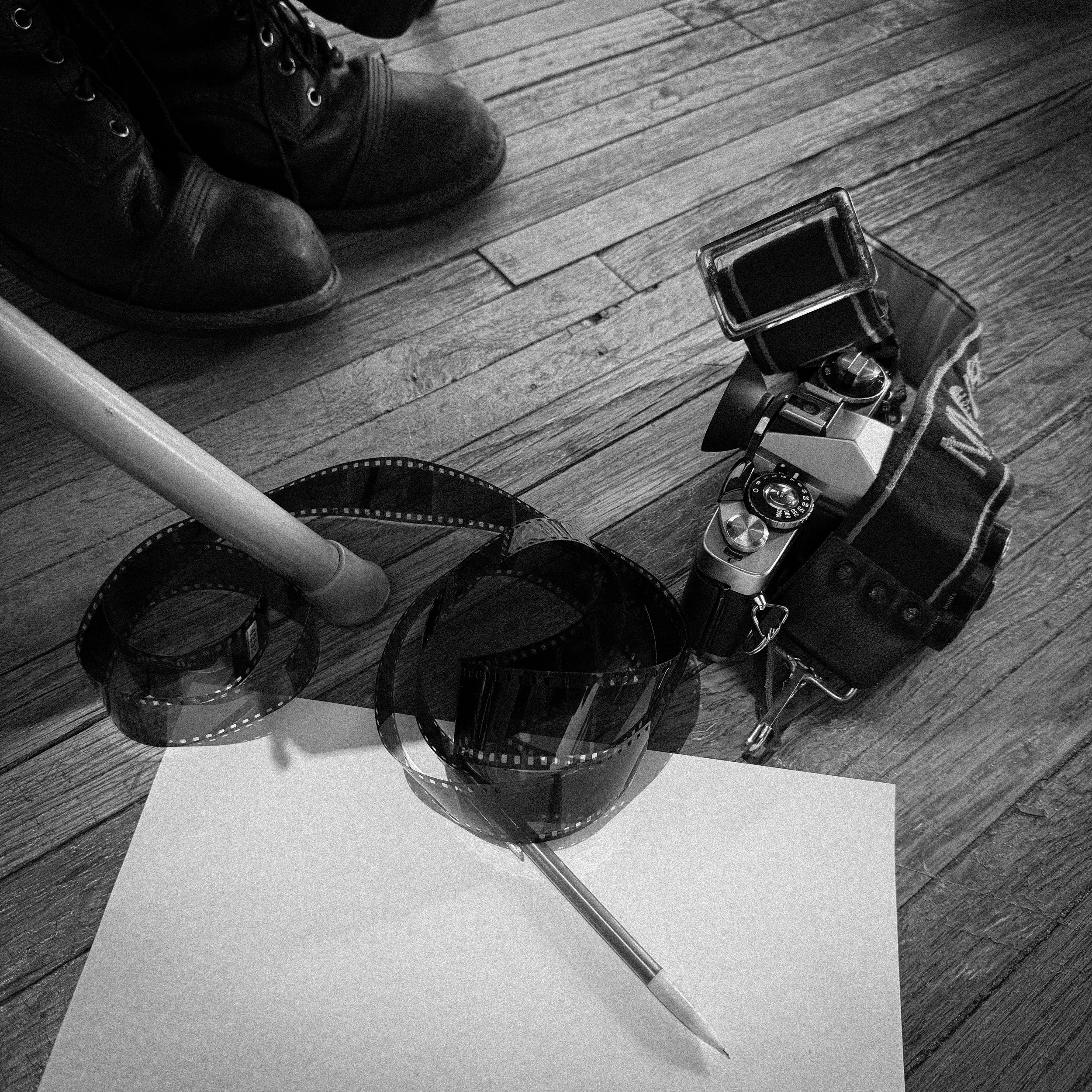
Learn how to develop black and white film at home without a darkroom, using environmentally and personally safe ingredients. The class will cover an overview of film development, usage of introductory development hardware, and factors to consider when making experimental developers. In the process of covering this information, everyone in the class will develop a roll of black and white 35mm film using a caffenol developer through hands-on instruction, using techniques accessible and replicable in a home environment.
This event has ended.
Instructor:Matthew King
Class Structure
Class and Instructor Introduction (30 minutes)
Development Process and Equipment (60 minutes)
Walkthrough of tools and techniques that will be usedPractical Development Session (120 minutes)
Guided hands-on film development, from out of the camera to the drying rackLunch break(30 minutes)
Bring lunch or order tacos from Centro down the street
Development Theory and Examples (60 minutes)
What is film, what happens when it is developed? After, a showcase of some examples of experimental development.Conclusion (30 minutes)
Review, questions, and wrap-up
Important Notes
This is not photography 101. Students should have prior knowledge of their camera.
Bring an exposed roll of B&W, 400 ISO, 35mm film to be developed, understanding that experimental development carries inherent risks.
An unexposed roll of black and white 35mm film will be provided for all students as well. This can be used to make images, using your own camera, if you’re unable to bring a pre-exposed roll.
All participants will receive a take-home guide on experimental film development with tips for future experimentation.
This activity is made possible by the voters of Minnesota through a grant from the Metropolitan Regional Arts Council, thanks to a legislative appropriation from the arts and cultural heritage fund.